_edited.jpg)
The Pressure To Be Perfect: Why Perfectionism Quietly Damages Confidence, Relationships, and Emotional Well-being

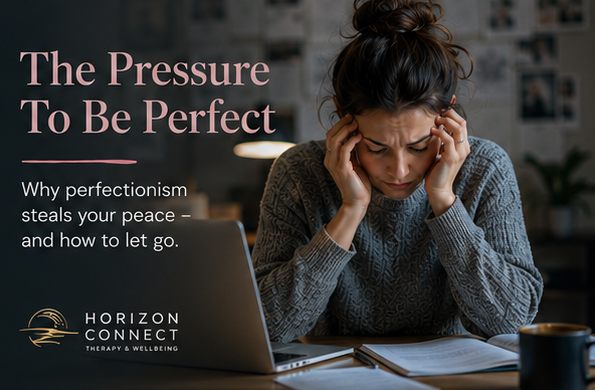
The Pressure To Be Perfect
Many people wear perfectionism like a badge of honour.
From the outside, they may appear:
organised
capable
ambitious
reliable
successful
calm
“high functioning”
But internally, perfectionism often feels very different.
It can feel exhausting.
Because underneath perfectionism there is often:
fear of failure
fear of judgement
fear of disappointing people
fear of rejection
shame
anxiety
self-criticism
emotional pressure
For many people, perfectionism is not really about wanting to be perfect.
It is about trying to avoid feeling “not good enough”.
Perfectionism Often Begins Long Before Adulthood
Nobody wakes up one day and suddenly decides:
“I will become emotionally exhausted trying to meet impossible standards.”
Perfectionistic patterns usually develop gradually through life experiences.
Sometimes through:
criticism
high expectations
emotionally unsafe environments
feeling only valued when achieving
fear of getting things wrong
emotionally inconsistent relationships
comparison
pressure to constantly cope
fear of disappointing others
Over time, many people unconsciously learn:
mistakes feel unsafe
vulnerability feels risky
rest feels undeserved
self-worth becomes linked to performance
“good enough” never truly feels enough
As a result, people may begin placing enormous pressure on themselves emotionally, professionally, socially, or within relationships.
The Hidden Side Of Perfectionism
Perfectionism is often misunderstood.
People assume it simply means:
working hard
being organised
having high standards
But emotionally, perfectionism can quietly affect:
confidence
emotional well-being
relationships
communication
self-worth
stress levels
vulnerability
emotional connection
Many perfectionists privately struggle with:
overthinking
burnout
emotional exhaustion
procrastination
anxiety
fear of failure
fear of judgement
difficulty relaxing
self-criticism
emotional withdrawal
Ironically, perfectionism can sometimes stop people from fully engaging in life because the fear of getting things wrong becomes overwhelming.

Why “Good Enough” Never Feels Safe
For many people struggling with perfectionism, achievements only bring temporary relief.
Very quickly, the internal pressure returns:
“I should be doing more.”
“I could have done better.”
“What if I fail next time?”
“People will notice my mistakes.”
“I cannot let people down.”
“I need to hold everything together.”
This constant pressure can become emotionally exhausting.
And because perfectionism is often socially praised, many people struggle to recognise how damaging it can become internally.
Perfectionism And Relationships
Perfectionism does not only affect work or achievement.
It can strongly affect emotional connection and relationships too.
Many people feel pressure to be:
emotionally “together”
endlessly supportive
attractive
productive
calm
understanding
successful
emotionally resilient
As a result, vulnerability can start to feel unsafe.
Some people:
avoid asking for support
hide emotional struggles
struggle communicating needs
become emotionally guarded
fear disappointing their partner
feel ashamed when struggling emotionally
withdraw when overwhelmed
Over time, this pressure can create emotional disconnection both from others and from themselves.
The Emotional Cost Of Constant Self-Pressure
Living under constant internal pressure affects more than productivity.
It affects emotional well-being.
Many people experiencing perfectionism eventually feel:
emotionally drained
disconnected
anxious
overwhelmed
“never enough”
emotionally numb
deeply self-critical
Some reach a point where they no longer know how to relax without guilt.
Others become trapped in cycles of:
burnout
overworking
emotional avoidance
procrastination
shutting down emotionally
self-sabotage
Because perfectionism is often rooted in fear rather than confidence.
You Do Not Have To Earn Your Worth
One of the hardest things for perfectionists to believe is:
“You are allowed to be human.”
Not productive all the time. Not emotionally perfect. Not endlessly coping. Not constantly achieving.
Human.
Many people spend years believing their value depends on:
success
productivity
appearance
emotional strength
pleasing others
never struggling
always “holding it together”
But emotional well-being cannot grow under constant self-criticism and pressure.
Often, healing begins when people slowly learn:
mistakes do not define worth
rest is not failure
vulnerability is not weakness
emotional struggles are human
self-worth should not depend entirely on achievement
Therapy Can Help Break The Cycle
Perfectionistic patterns are often deeply emotional rather than purely behavioural.
This is why simply “trying to relax” rarely solves the problem.
Therapy can help people better understand:
where perfectionistic pressure developed
why self-criticism feels so automatic
how fear drives perfectionism
how perfectionism affects relationships and emotional well-being
why vulnerability may feel unsafe
how healthier emotional balance can gradually develop
Importantly, therapy is not about removing ambition or standards.
It is about reducing the emotional pressure, shame, fear, and exhaustion attached to them.
You Are Allowed To Be Enough Without Being Perfect
Many people quietly carry the belief:
“If I stop pushing myself constantly, everything will fall apart.”
But emotional well-being is not built through endless self-pressure.
It is built through emotional safety, self-understanding, balance, and compassion.
At Horizon Connect, we provide warm, professional, confidential therapy for people struggling with:
perfectionism
anxiety
burnout
self-worth difficulties
emotional overwhelm
relationship pressures
confidence struggles
emotional disconnection
Our therapists provide supportive, non-judgemental therapy designed to help people better understand themselves and develop healthier emotional balance, confidence, and self-compassion over time.
Because you do not need to be perfect to deserve support, connection, or emotional well-being.
Start With A Private Conversation
Professional, confidential therapy across Plymouth and surrounding areas.
💻 Online and in-person appointments available🤍 Compassionate, experienced therapeutic support
Start your confidential enquiry with Horizon Connect
Frequently Asked Questions
Is perfectionism linked to anxiety?
Yes. Perfectionism is often strongly connected to anxiety, fear of failure, shame, and self-worth struggles.
Can therapy help with perfectionism?
Therapy can help people better understand perfectionistic patterns, emotional triggers, self-criticism, and fears contributing to emotional pressure.
About The Author
Written by Alan Stokes, Director of Horizon Connect and a BACP-registered therapist supporting individuals with confidence difficulties, perfectionism, emotional wellbeing struggles, anxiety, and self-worth issues.
Learn more at https://www.horizonconnect.co.uk


Comments